

Jan Ernest – A Living Legend in the World of Pigeon Racing
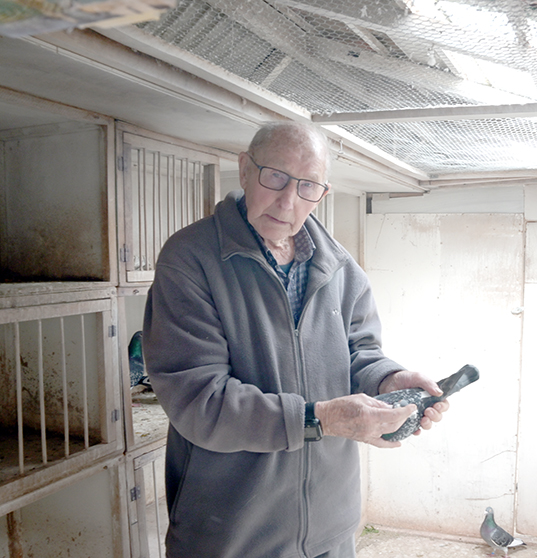
At 97 years old, Jan Ernest is a living legend in the world of pigeon racing.
An example, a source of inspiration, a top competitor, a connoisseur, and a breeder of some of the finest marathon pigeons ever known.
He has earned countless praises — but how did it all begin?
Jan started his pigeon racing career at the age of eight, living on Kladde Street in Lepelstraat, as the eighth child in a family of ten.
From a young age, he was fascinated by nature — flowers, plants, birds — everything sparked his deep curiosity.
Before the war, pigeon racing was beginning to flourish. The “racehorses of the sky” brought relaxation and joy especially to working-class people, and many pigeon clubs were founded in those years.
In a small loft made of recycled wood, Jan kept his first racing pigeons. During the war, he even hid them inside an old stove from which he had removed the inner parts.
Young Jan became a member of the PV De Luchtbode club in Lepelstraat, but when PV De Vredesduif was founded in 1945 nearby, he joined that club instead.
Like most fanciers of the time, Jan raised pigeons for all distances, and had to deliver the race ring by hand — on foot or by bicycle — to the central clock station.
At that time, Jan worked at the De Zoom Laundry in Bergen op Zoom, where he caught a red cock pigeon near a fountain and paired it with an English hen he found.
After the war, obtaining pigeons was difficult — owning them had been practically forbidden during the occupation, and only a few pigeons had survived.
This pair brought Jan his first true success in the marathon category.
With a single pigeon, he cycled to the Verpaalen shipping point in Bergen op Zoom to take part in the St. Vincent race — and succeeded.
That was when his passion for marathon racing truly ignited.
In the 1950s, Jan moved to Steenbergen, on Jan van Bruhezestraat.
At that time, Steenbergen was already the Mecca of marathon racing in the Netherlands, home to great names such as Jan Aarden, Bakker Meesters, Jan de Weert, De Groot, De Ron, and many others.
Jan sold his pigeons from Lepelstraat, and the long-distance fancier Petrus de Bruijn happily bought his red breeding cock.
He joined the Slokkers club and borrowed a timing clock from Piet van Achtmaal. Later, he rented another from Van Oevelen’s radio shop on the quay — a side business the shop owner ran.
Jan achieved good results across all distances, but his greatest marathon successes came after moving to Stadshillen, especially when Janus van der Wegen and his sons, already renowned marathon specialists, became his backyard neighbors.
Janus owned an exceptional breeding pair from Tinus van Meer and Toon Ligtenberg, and eventually gave Jan a pair of eggs. Unfortunately, the young birds were eaten by a cat because the loft hadn’t been properly closed.
Later, Jan received another set of eggs — which, as it turned out, came from the 1st National Dax winner of A. van der Wegen & Sons.
From one of those young birds, paired with a speckled hen from Dingemans (from Nuitermans’ fish trader line), Jan bred his first true foundation bird for the marathon line — the legendary Oud Bontje (“Old Speckled”).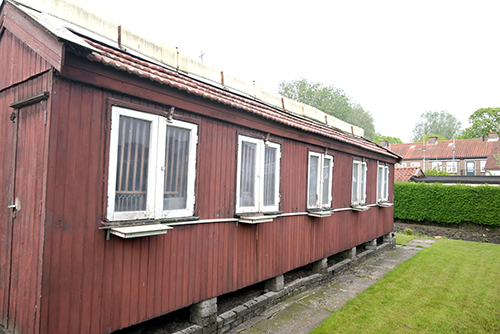
Oud Bontje was an outstanding racer (including 9th National St. Vincent), but an even greater breeder.
From him came, among others, Witstaart (“White Tail”) and Angoulemeduif, the latter achieving 4th National Angoulême at just a young age, over a distance of 730 km.
Other top pigeons included Roodoog, Witpen 991, 051, 052, and many others.
Later, Jan achieved great success with pigeon No. 55, a direct son of the famous 131 of Jan de Weert, received 14 days after hatching.
Pigeon 55 was later sold to Peter van de Eijnden from Deurne.
Jan developed a close friendship with his back neighbor Jac (Koos) van Dijk, a marathon champion of the 1980s and 1990s, who achieved major success with pigeons from the Ernest line.
In 1988, tragedy struck — 37 of Jan’s pigeons were stolen; 13 returned, but with their rings cut off.
Despite the frustration, he rebuilt his line, and the result was the famous Pau, the best Dutch pigeon at the Pau races between 1992–1995, achieving 6th and 9th National.
Pau became the new foundation bird of the Ernest line.
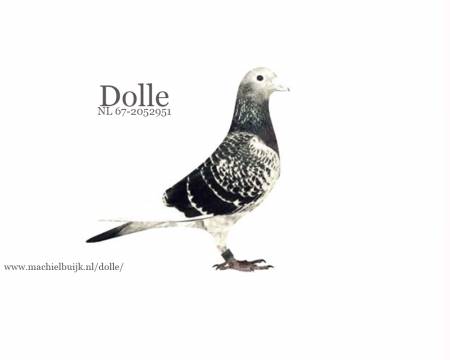
One of the top pigeons after 2000 was the celebrated “DE TELETEXT” (06-1212447), with remarkable results such as 6th National Dax 2012, 5th National Tarbes, and 8th National Bergerac, among others.
Beyond his own exceptional marathon results, Jan Ernest became even more influential thanks to his pigeons — purchased by other fanciers who became famous nationally and internationally,
including Joost Desmeyter-Restiaen (Belgium), the Kreuer Brothers (Germany), Walter Van der Meulen, Cees Van Heijst, and many more.
Jan Ernest continued to participate actively until 2024, maintaining his inbred Stadshillen line and building an impressive record.
A touch of new blood (for example, from L. Kouters), tested in competition, then bred back through inbreeding — that was Jan Ernest’s consistent principle.
But age, health, and the passing of his beloved wife Lena made it too difficult to continue the sport he loved so deeply.
And so, in 2024, the curtain finally fell.